
Technical inspection for a newly built house
Even a brand-new house can have construction defects. A technical inspection for a newly built home catches them before you move in, while the builder is still on the hook to fix them. Here's how it works and how it differs from a completion inspection.
Enter your postcode & discover available inspectors


- 100% free & no obligation
- Certified inspectors (NHG/NEN)
- Multiple quotes within 3 minutes
- Save up to 45% on costs
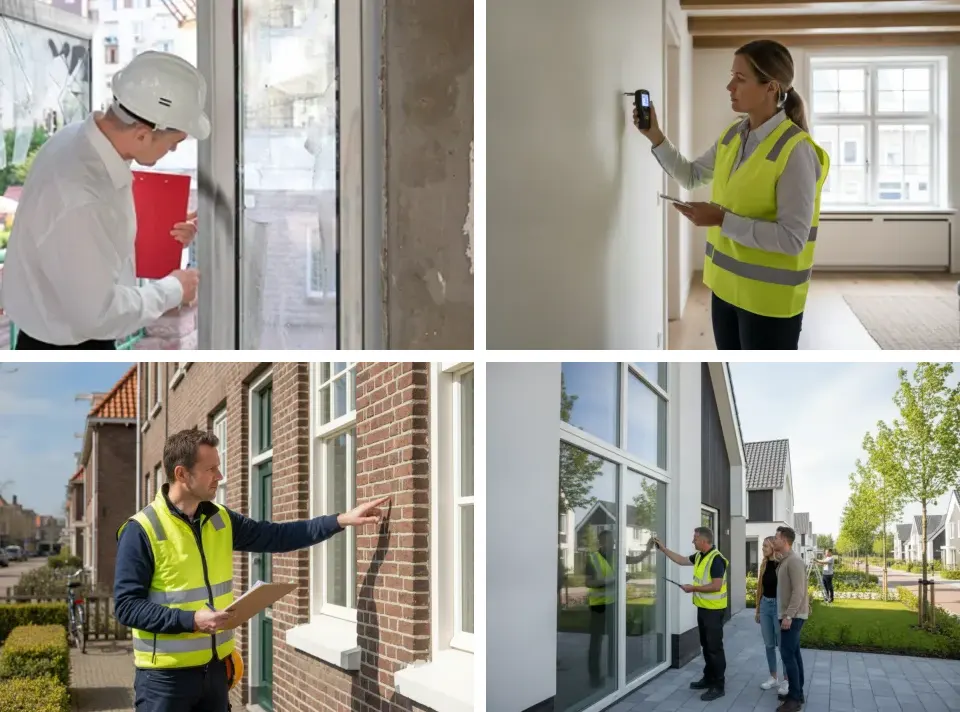
Yes, a newly built house can still have defects worth inspecting for. Everything looks new, but problems can creep in during construction — and a technical inspection catches them before you move in, while the builder is still responsible for putting them right. Below you'll find the main benefits and how this differs from a completion inspection.
Why inspect a new-build home?
A technical inspection (building inspection) for a new-build differs slightly from one for an existing home, but it serves the same goal: making sure the house meets building standards and is free of defects. The main reasons:
Quality check
You'd expect a new home to be flawless, but issues can arise during the build. An inspection identifies any defects or deficiencies before you move in, while they're still easy to fix.
Warranty and liability
If defects are found, the builder can repair them before handover. That keeps the builder's warranty intact and reduces liability headaches later.
Negotiating room
When problems surface, you have leverage to negotiate repairs or modifications before the purchase is finalised — which can affect the price or the terms.
Not sure what to focus on? Read what to pay attention to during an inspection.
Receive quotes for building inspections in your area
We deliver you 3 building inspectors and you can accept the best choice.
How the inspection works
Broadly, inspecting a new-build follows the same procedure as an existing home. Once you've found an inspector, it helps to know what to expect:
1. Select a technical inspector
Choose an independent, qualified building inspector with experience in new-construction projects who knows the local building regulations.
2. Schedule it
The inspection is usually scheduled before the final payment to the builder and before you move in — giving the builder time to address any issues.
3. Inspect
The inspector thoroughly examines the whole house: structure, foundation, electrical systems, plumbing, roof, insulation and more. They also check that everything complies with local building codes and the construction drawings.
4. Report
The inspector prepares a detailed report covering every finding, including defects and recommended repairs. You use this to take further action.
5. Negotiate and repair
If problems are identified, you negotiate the fixes with the builder before completion.
6. Finalise
After the repairs, the inspector re-inspects to confirm everything was fixed as agreed.
A technical inspection for a new-build is a worthwhile investment: it gives you peace of mind, confirms your new home meets expectations, and helps prevent later costs and disputes.
Completion inspection vs technical inspection
A completion inspection and a technical inspection happen at different stages of a new home's construction. The key differences:
| Completion inspection (oplevering) | Technical inspection | |
|---|---|---|
| Timing | At handover, before final payment to the builder | Can run alongside or just before handover, on your behalf |
| Purpose | Checks the home matches the contract — finishes, materials and specifications agreed in the purchase | Independently assesses construction quality and catches hidden defects |
| Carried out by | Often a representative of the builder, together with you | An independent inspector who works only for you |
| Result | A list of defects (opleverpunten) and repair arrangements | A detailed report with findings, severity and repair advice |
In short, the completion inspection confirms the builder delivered what was promised, while the technical inspection gives you an independent, expert view of the build quality. Many buyers value having both.
Frequently asked questions
Yes. New homes can still have construction defects, and catching them before you move in means the builder fixes them under warranty rather than you paying later.
Before the final payment to the builder and before you move in, so the builder still has time and obligation to address any issues found.
The completion inspection (oplevering) checks the home matches the purchase contract and is often run by the builder. The technical inspection is an independent assessment of build quality carried out for you.
Related articles
Receive quotes for building inspections in your area
We deliver you 3 building inspectors and you can accept the best choice.
- Data-driven
- No obligations
- Fast & easy
Enter your postcode