
Reasons to get a technical inspection when buying a house
The main reason to get a technical inspection is certainty: you learn the real condition of a house and the cost to fix any defects before you commit. Here's why, and when, it pays off.
Enter your postcode & discover available inspectors


- 100% free & no obligation
- Certified inspectors (NHG/NEN)
- Multiple quotes within 3 minutes
- Save up to 45% on costs
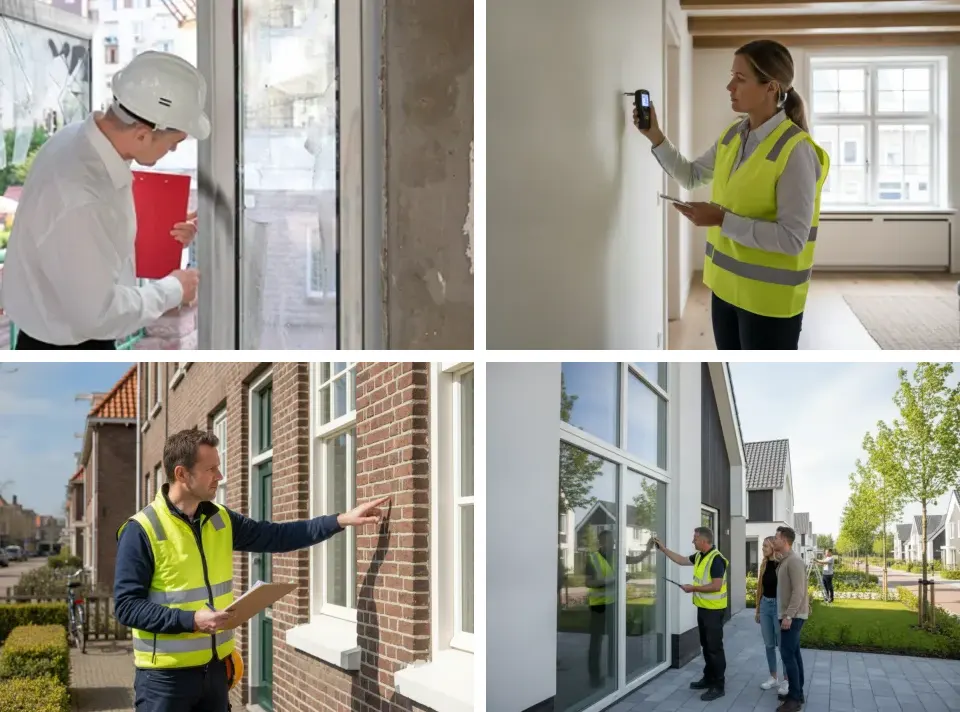
The main reason to get a technical inspection (bouwkundige keuring) is certainty. Before you sign for a property, an independent inspector tells you the real structural condition of the house and roughly what it will cost to put any defects right. That protects you from overpaying, from a hidden maintenance backlog, and from a purchase you later regret. A standard inspection costs €350 to €600, which is small next to a single unexpected repair.
The main reasons to inspect
A technical inspection — also called a structural inspection or building survey — is a visual check of an existing house, from the attic to the crawl space and from the inside out. It gives you three things buyers usually don't have:
- Insight into the condition. You learn what's wrong, how serious it is, and what's likely to need attention in the next 5–10 years.
- A repair-cost estimate. The report puts numbers against the defects, so you know what you're really paying for.
- Negotiating power. With a report in hand, you can ask for a price reduction, ask the seller to fix issues, or walk away.
The right reason can differ depending on whether you want to buy, sell, or maintain a property.
Receive quotes for building inspections in your area
We deliver you 3 building inspectors and you can accept the best choice.
When buying a house
Planning to buy? You can time the inspection at three different points:
During negotiations with the seller
You make your final decision depend on the outcome of the inspection. The risk in a tight market: the seller accepts another buyer's offer while you arrange it.
During the legal cooling-off period
After you and the seller sign the purchase agreement, a private buyer has a statutory cooling-off period of at least three days (minimum two of which are working days). Within that window you can cancel the purchase free of charge and without giving a reason — including after a disappointing inspection.
After signing the purchase agreement
You include the inspection as a resolutive condition (voorbehoud bouwkundige keuring) in the agreement, often with a threshold — for example, you can withdraw if immediate repairs exceed €10,000.
When selling a house
Planning to sell? A technical inspection shows interested buyers the condition of your house up front, which builds trust and can speed up the sale. You can also fix defects beforehand to make the property more attractive and avoid surprises during negotiations.
For maintenance planning
Want to know what maintenance is due now, and what's coming in the years ahead so you can set money aside? A building inspection maps out current and future maintenance, so you can budget for the roof, façade, or installations instead of being caught out.
Is a technical inspection compulsory?
No — you are not legally obliged to have a structural inspection before buying. However, some mortgage lenders make one a condition for financing, particularly for older homes or when the property valuation report flags possible defects. Even when it isn't required, it's strongly recommended for pre-1980 properties, homes with visible defects, and first-time buyers unfamiliar with Dutch construction.
Before or after making an offer?
You can inspect before or after you make an offer. In a competitive market you often can't inspect before offering, or the house sells to someone else first.
- Before offering gives you full certainty and lets you use the findings to negotiate from the start — but you pay upfront even if you don't buy.
- After offering with a resolutive condition lets you move fast while staying protected, for example by stipulating the house must be free of serious roof leaks before a set date.
Compare technical inspectors
HuisAssist helps you compare several pre-vetted technical inspectors, so it's easy to choose the one that suits you best.
Frequently asked questions
No, it's not legally required. But some mortgage lenders require one as a condition for financing, especially for older properties or when the valuation report recommends further investigation.
Certainty. You learn the real condition of the house and what repairs will cost before you're locked in — which protects you financially and strengthens your negotiating position.
Yes, if you time it right. During the statutory cooling-off period (at least three days for a private buyer) you can cancel free of charge, and a resolutive condition in the purchase agreement lets you withdraw if repair costs exceed an agreed threshold.
A standard technical inspection costs roughly €350 to €600 depending on the size, age and location of the property. See our costs page for a full breakdown.
Related articles
Receive quotes for building inspections in your area
We deliver you 3 building inspectors and you can accept the best choice.
- Data-driven
- No obligations
- Fast & easy
Enter your postcode