
What is a technical inspection (bouwkundige keuring)?
A technical inspection reveals the structural condition of a property before purchase. Costs range from €350-€600. Learn what's inspected, how it works, and why it's essential.
Enter your postcode & discover available inspectors


- 100% free & no obligation
- Certified inspectors (NHG/NEN)
- Multiple quotes within 3 minutes
- Save up to 45% on costs
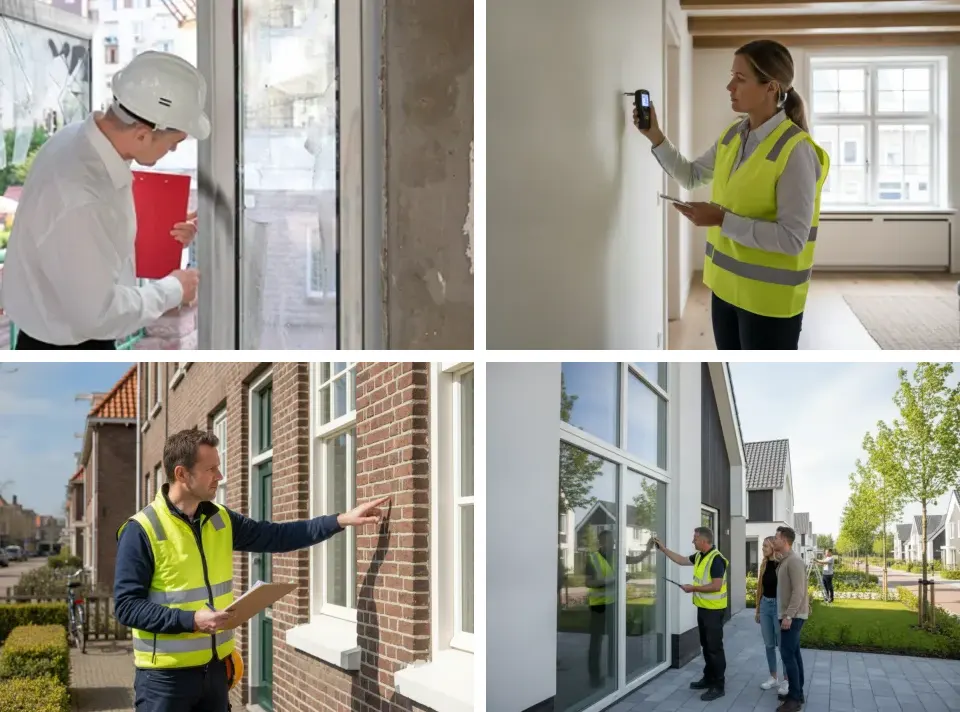
A technical inspection (bouwkundige keuring) is a comprehensive assessment of a property's structural and technical condition. Before buying a home in the Netherlands, a certified inspector examines the building from foundation to roof, documenting defects, maintenance needs, and repair costs. This report protects you from unexpected expenses and gives you negotiating power.
In this guide, you'll learn what a technical inspection covers, what it costs, and how it helps you make an informed purchase decision.
What does a technical inspection cover?
A certified inspector examines all visible building components during a visual inspection. The inspection typically takes 1-1.5 hours and results in a detailed report with photos, defect descriptions, and cost estimates.
Standard inspection checklist
| Component | What's inspected |
|---|---|
| Foundation & crawl space | Structural integrity, moisture, ventilation, fungal growth |
| Roof structure | Tiles, beams, insulation, gutters, chimneys |
| Exterior walls & facades | Brickwork, cracks, dampness, window frames |
| Interior walls & ceilings | Plasterwork, cracks, signs of moisture damage |
| Floors | Levelness, structural soundness, moisture |
| Installations | Heating system, electrical wiring, plumbing, ventilation |
| Woodwork | Window frames, doors, staircases, structural timber |
| Sanitary areas | Bathrooms, toilets, drainage systems |
The inspector does not open walls or lift floorboards — it's a non-invasive visual assessment. For deeper investigation (e.g., foundation or asbestos testing), you'll need specialist inspections.
Receive quotes for building inspections in your area
We deliver you 3 building inspectors and you can accept the best choice.
What's included in the inspection report?
After the inspection, you receive a comprehensive report (typically within 24-48 hours) that includes:
1. Condition assessment A detailed overview of the structural state of the property, highlighting defects and maintenance backlogs.
2. Repair cost estimates Short-term repair costs (urgent) and long-term maintenance costs (5-10 years) with estimated budgets.
3. Sustainability advice Recommendations for improving energy efficiency, such as:
- Insulation (walls, floors, roof, windows)
- Solar panels
- Heat pump installation
- Energy label improvements
4. Photos and documentation Visual evidence of all defects and areas requiring attention.
5. Verbal explanation Most inspectors offer an immediate on-site explanation of their findings, so you understand the key issues right away.
How much does a technical inspection cost?
Technical inspection costs in 2026 range from €350 to €600, depending on property size, age, and location. Larger or older properties require more time and expertise, which increases the price.
Typical costs by property type
| Property type | Average cost (incl. VAT) |
|---|---|
| Apartment | €350 – €450 |
| Terraced house | €400 – €500 |
| Semi-detached house | €450 – €550 |
| Detached house / villa | €500 – €600+ |
| Urgent/express report (within 48h) | +€50 – €100 |
Additional specialist inspections:
- Asbestos testing: €150 – €300
- Foundation inspection: €600 – €1500
- Moisture/damp analysis: €200 – €400
When is a technical inspection required?
A technical inspection is often mandatory when applying for a mortgage with National Mortgage Guarantee (NHG), especially for older properties or when the valuation report recommends further investigation.
Even when not required, a technical inspection is highly recommended for:
- Older properties (built before 1980)
- Properties with visible defects or suspected structural issues
- First-time buyers unfamiliar with Dutch construction standards
- Renovation plans — understanding existing conditions before starting work
Can you deduct technical inspection costs?
Yes, technical inspection costs are tax-deductible when the inspection is required by your mortgage lender. If the bank or NHG mandates the inspection as a condition for financing, you can deduct the costs as part of your mortgage expenses.
If the inspection is voluntary, it's generally not tax-deductible.
Benefits of a technical inspection
1. Avoid unexpected repair costs
The inspection reveals hidden defects — structural cracks, moisture damage, outdated installations — before you commit to buying. This prevents costly surprises after moving in.
2. Strong negotiating position
Many buyers recover the inspection cost through successful price negotiations. If the report uncovers significant issues, you can:
- Request a price reduction equal to the repair costs
- Ask the seller to fix the defects before transfer
- Withdraw from the purchase agreement (if you included a technical inspection contingency)
3. Informed purchase decision
You'll know exactly what you're buying. The report helps you decide whether the property is worth the asking price or if the maintenance backlog is too high.
4. Plan future maintenance
The report includes long-term maintenance advice, so you can budget for roof replacement, facade work, or installation upgrades over the next 5-10 years.
Technical inspection before or after making an offer?
You have two options:
Option 1: Inspection before making an offer
| ✅ Pros | ❌ Cons |
|---|---|
| Complete certainty before committing | Costs upfront even if you don't buy |
| No risk of losing deposit or legal complications | Time-consuming in a competitive market |
| Seller may accept another offer while you arrange inspection |
Option 2: Inspection after offer (with contingency clause)
Most experienced buyers include a technical inspection contingency (voorbehoud bouwkundige keuring) in the purchase agreement. This allows you to withdraw from the purchase if the inspection reveals defects exceeding a pre-agreed threshold (e.g., €10,000 in immediate repairs).
| ✅ Pros | ❌ Cons |
|---|---|
| Move quickly in competitive markets | Tight timeline (typically 3-5 days for inspection) |
| Only pay if your offer is accepted | Risk of losing deposit if you withdraw without valid reason |
| Legal protection if major defects are found |
Recommended approach: Include a contingency clause in your offer, specifying a maximum acceptable repair cost. This protects you while allowing you to act fast.
How to book a technical inspection
- Find a certified inspector Look for inspectors certified by Vastgoed Nederland or members of the Dutch Association of Building Inspectors (BBI). Reports should comply with NTA 8060 standards.
- Schedule the inspection Book as soon as your offer is accepted. Most inspections can be arranged within 2-5 days.
- Attend the inspection It's highly recommended to be present. The inspector will explain findings on-site and answer your questions.
- Review the report You'll receive the full report within 24-48 hours. Use it to negotiate with the seller or make your final purchase decision.
Specialist inspections
For older properties or specific concerns, consider additional specialist inspections:
| Type | When needed | Cost |
|---|---|---|
| Asbestos inspection | Properties built before 1995 | €150 – €300 |
| Foundation inspection | Pre-1970 properties in subsidence-prone areas | €300 – €600 |
| Moisture/damp analysis | Signs of rising damp or water damage | €200 – €400 |
| Electrical safety inspection | Outdated wiring or DIY installations | €200 – €350 |
These are not included in a standard technical inspection and must be arranged separately.
Related services
Frequently asked questions
No, it's not legally required. However, many mortgage lenders require it when applying for a National Mortgage Guarantee (NHG), especially for older properties.
The on-site inspection typically takes 2-3 hours, depending on property size. You'll receive the full report within 24-48 hours.
A valuation report (taxatierapport) determines the market value of the property for mortgage purposes. A technical inspection assesses the technical and structural condition. Both serve different purposes — the valuation is for the bank, the inspection is for you.
Yes, absolutely. If the report reveals defects, you can request a price reduction, ask the seller to fix the issues, or withdraw from the purchase (if you included a contingency clause).
You risk buying a property with hidden defects that cost thousands to repair. Without an inspection, you have no legal recourse if major issues surface after purchase.
Yes, technical inspection costs are tax-deductible when the inspection is required by your mortgage lender. If the bank or NHG mandates it, you can deduct the costs as part of your mortgage expenses.
Book as soon as your offer is accepted. Most inspections can be arranged within 2-5 days. Include a technical inspection contingency (voorbehoud) in your purchase agreement to protect yourself legally.
A technical inspection is one of the best investments you can make when buying property in the Netherlands. It protects you financially, strengthens your negotiating position, and ensures you know exactly what you're buying.
Receive quotes for building inspections in your area
We deliver you 3 building inspectors and you can accept the best choice.
- Data-driven
- No obligations
- Fast & easy
Enter your postcode